EXPERIMENT 002 / QUALITY PREVIEW
Light deserves a closer look.
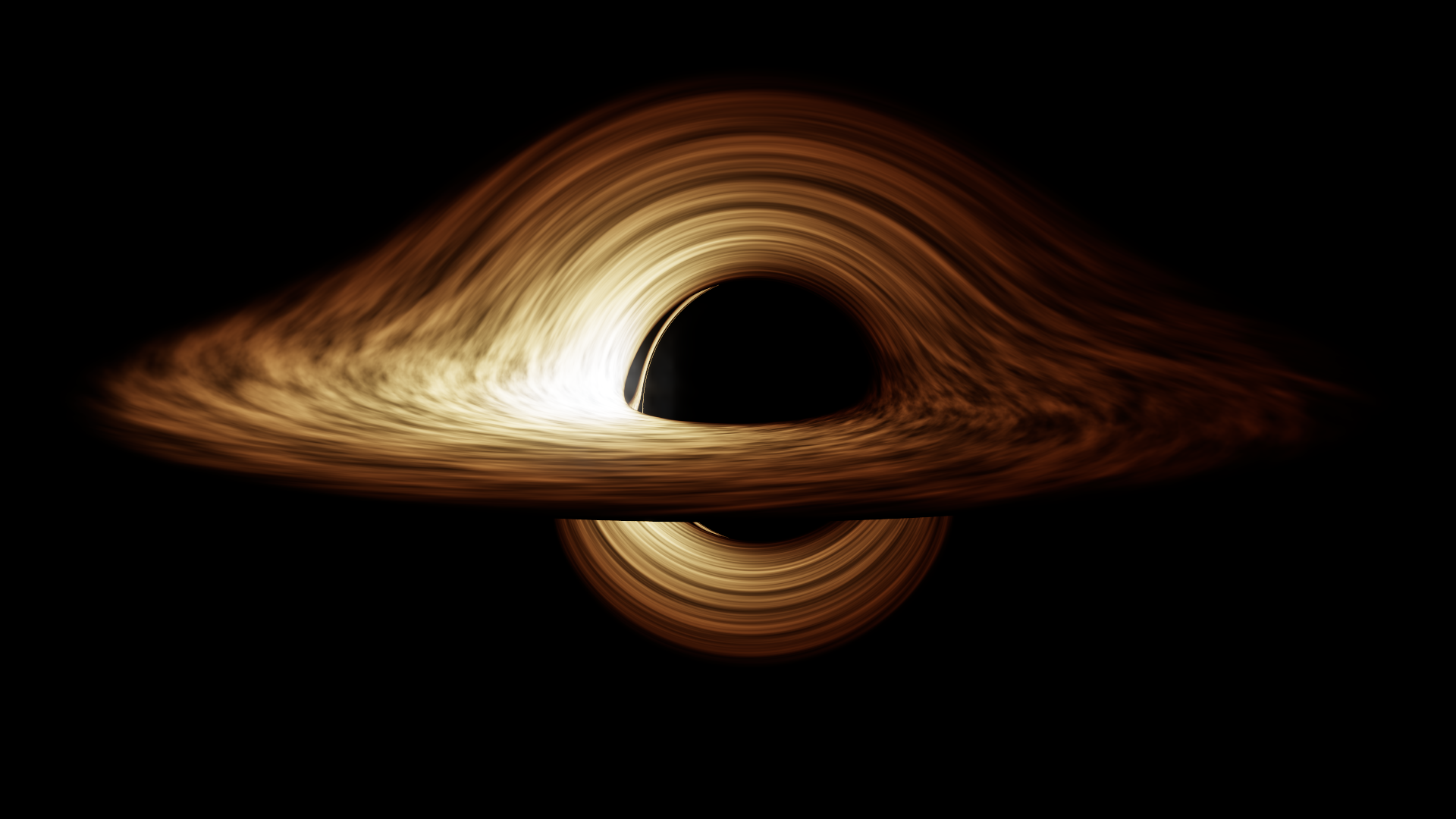
A finer image of the same extraordinary geometry. Let the view settle to reveal more detail, or separate physical frequency shifts from a cinematic interpretation.
EXPERIMENT 002 / V2
The other side of darkness.
Tilt a luminous disk, change the black hole’s spin, and see what gravity does to the light.
Runs in your browser. Mouse, touch, and keyboard controls.THE MOTION STUDY / 2 SECONDS
Same view. More light to work with.
Left: v1. Right: v2. Both panels use 1280 × 720 source frames, identical camera poses, spin, exposure and frequency-shift settings. v2 averages eight samples and changes texture and compositing. This short study compares the combined result; it is not the final 4K film.
Open the 1920 × 1080, 32-sample still ↗ · Capture settings and frame hashes ↗
KERR GEOMETRY / STATIONARY EMISSION
Detail belongs to the disk.
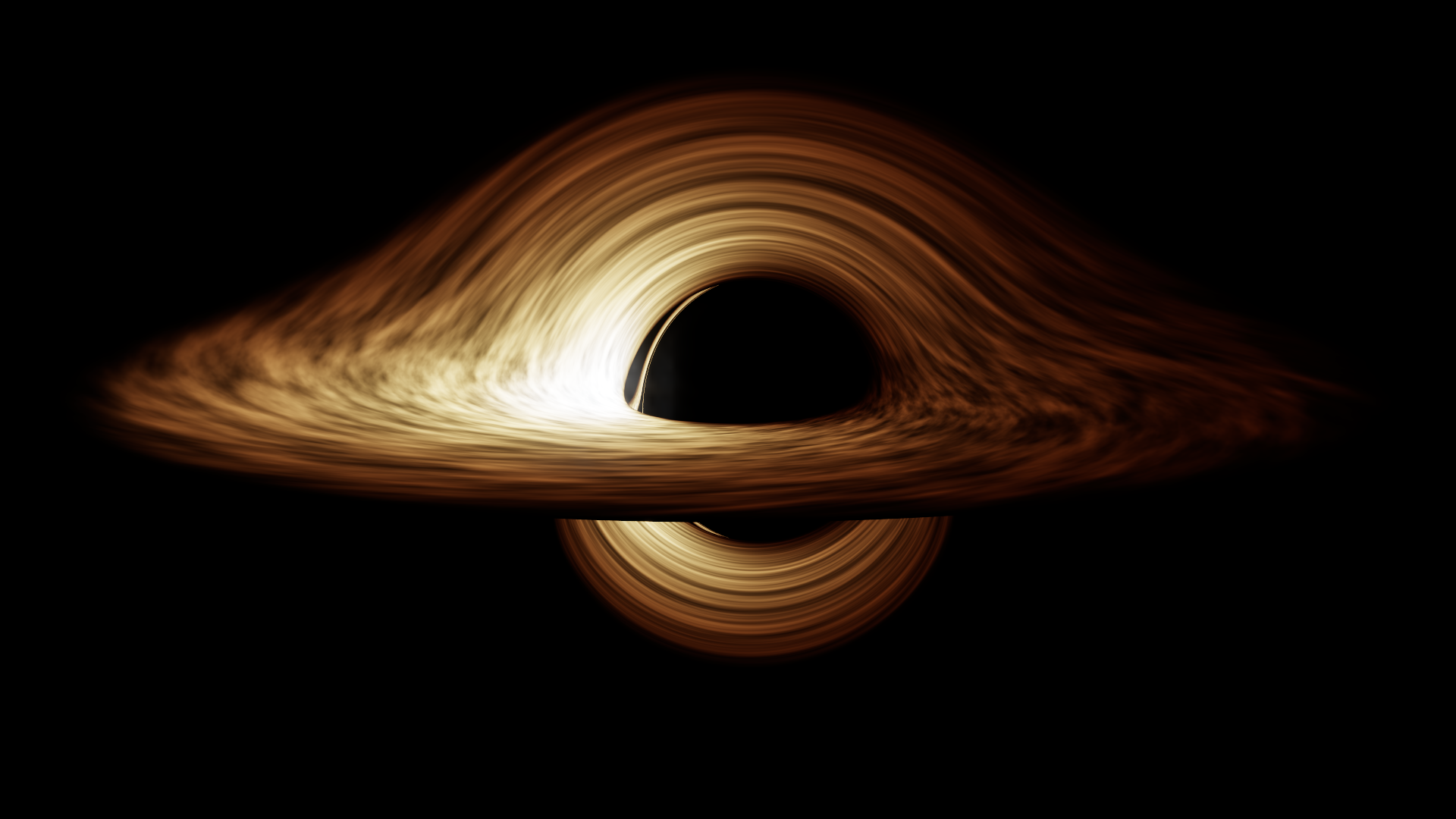
The renderer follows light backward through Kerr spacetime and samples an illustrative spiral pattern at the emitting radius and longitude. Multiple images therefore refer to one shared disk. The pattern is stationary; it does not represent gas motion or turbulence.
Balanced refines to eight samples after interaction; Sharp refines to 32. HDR buffers preserve bright light until bloom and tone mapping. Rendering stops when refinement completes. Devices without float color buffers use a labeled fallback without bloom.
Scientific presentation keeps relativistic frequency transfer with texture and bloom off. Cinematic presentation disables frequency shifts and enables those display choices. Both keep spin and camera unchanged. The observer remains at infinity: dragging tilts the view, and framing is not distance.